Your web browser is out of date. Update your browser for more security, speed and the best experience on this site.

Update your browser

St. Bonaventure on Order

Jonathan Bieler

Saint Bonaventure

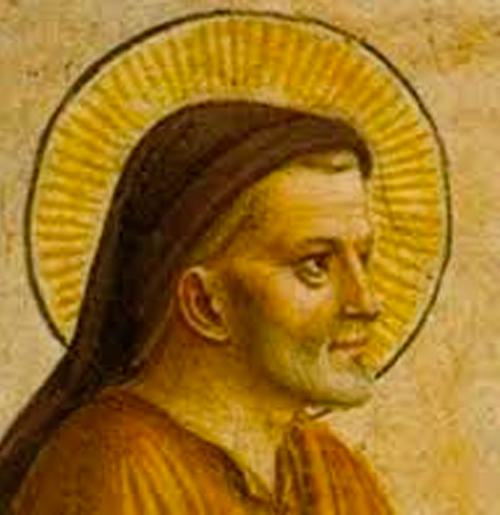
As the Cambridge Dictionary says, order denotes “the way in which people or things are arranged, either in relation to one another or according to a particular characteristic.” If it is true that, for us moderns, at the root of reality are the will to power from above or evolution by a process of selection from below, then the way any order is arranged must ultimately be either by imposition or by chance. Both are forms of arbitrariness that turn any order into an imposed arrangement devoid of truth and goodness. It is worth re-sourcing St. Bonaventure (d. 1274) for a different view of order. 

Continue Reading
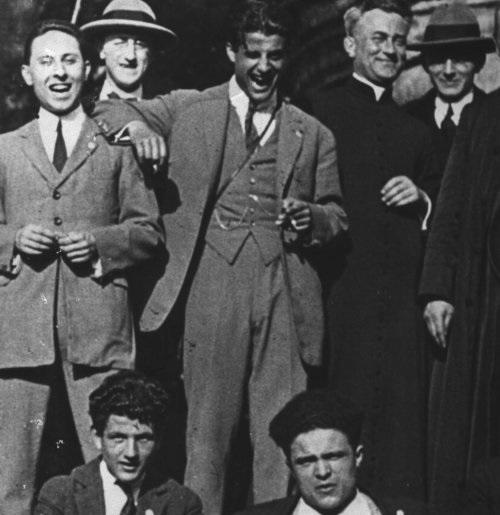
Fortepan / Urbán Tamás

Episcopal Authority and Communio Ecclesiology

Nicholas J. Healy Jr.

Read Full Article
Current Issue

Order: Issue One

On the Order of Things

“Peace is the tranquility of order,” St. Augustine tells us. And it is notable that the conception of both peace and order in his famous dictum transcends the political in the narrow sense. Rather, the Bishop of Hippo was getting to the roots of the question, to the foundational arrangement of all things in divine wisdom and love. Peace, then, requires an attunement to the order of the cosmos, from the atomic to the astronomic. In a world marked by disorder in virtually every sphere, it behooves us, no less than Augustine, to explore the wellspring of peace to be found in the order of creation.

View Issue

Past Issues

Humanum is about the human: what makes us human, what keeps us human, and what does not. We are driven by the central questions of human existence: nature, freedom, sexual difference and the fundamental figures to which it gives rise, man, woman, and child. We probe these in the context of marriage, family, education, work, medicine and bioethics, science and technology, political and ecclesial life. We sift through the many competing ideas of our age so that we might “hold fast to what is good” and let go of what is not. In addition to articles, witness pieces, and book reviews ArteFact: Film & Fiction searches out the human in the literary and cinematic arts.

Humanum is published as a free service by the Pontifical John Paul II Institute for Studies on Marriage and Family in Washington, D.C.